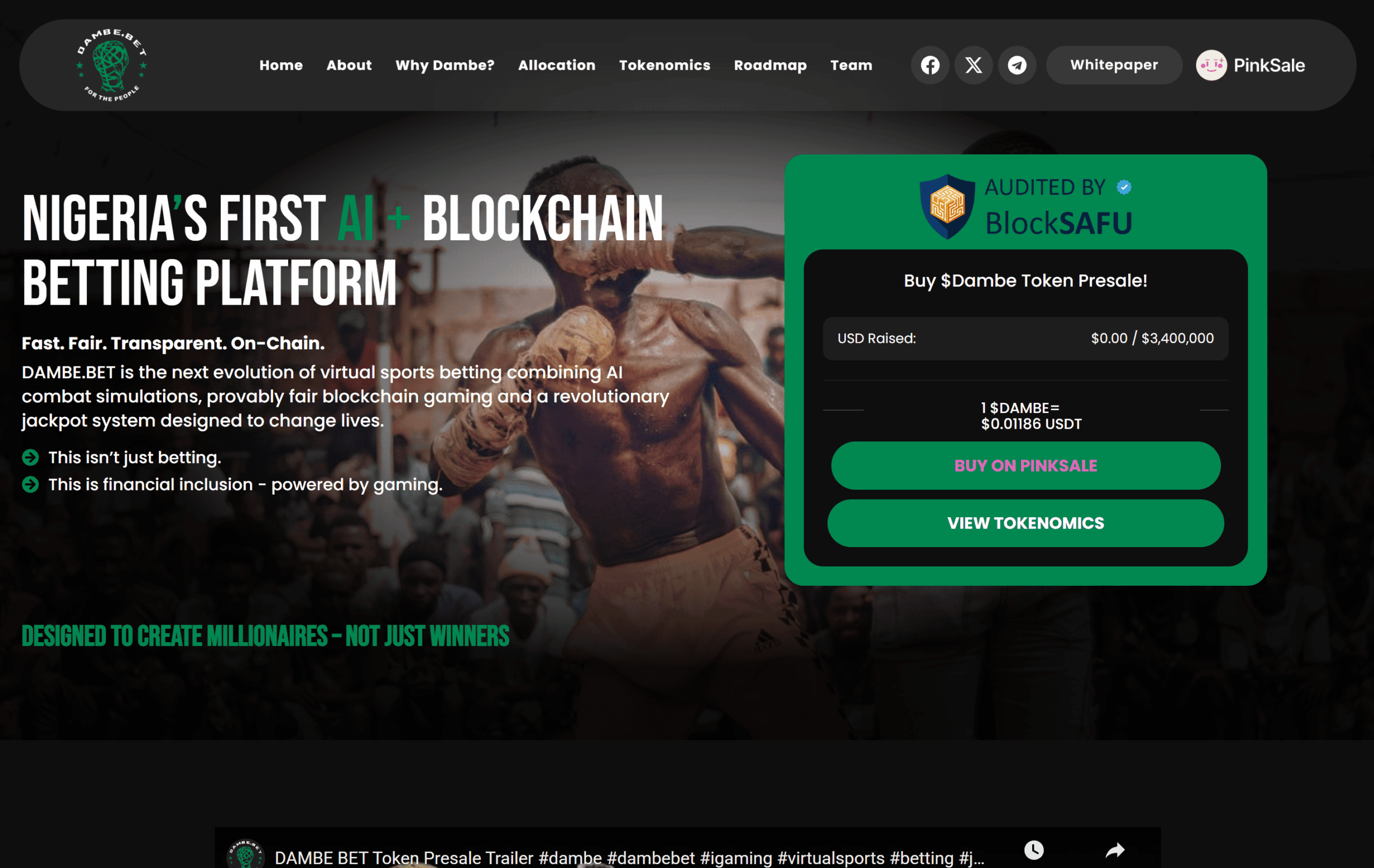
Meta Description: DAMBE.BET is an upcoming BSC presale with a published BlockSAFU audit and defined liquidity lock terms—here’s a clear, beginner-friendly review of the sale details, security signals, token setup, and risks to watch.
What This Review Covers and Why It Matters
Presales can be exciting, but they can also be messy. You’ll often see bold promises, big numbers, and hype-heavy marketing. The smarter approach is simple: treat a presale like a safety inspection. You don’t need to be a coder—just know which “signals” matter most.
For this review, I focused on two public sources: the presale page on PinkSale (caps, timeline, rates, liquidity plan), and the audit summary/certificate on BlockSAFU (issue counts, trust score label, tax behavior, and basic risk notes). (Source: BlockSAFU + PinkSale)
Also, quick reminder: this is not financial advice. Even a clean audit does not guarantee a safe investment. PinkSale itself states it doesn’t endorse projects and asks users to do their own research.
DAMBE.BET Review Snapshot
At a glance, this presale is presented as a long-term “utility & settlement token” with a sustainability-first pitch, and it’s scheduled as a public presale on BSC. The presale page includes clear parameters (soft/hard cap, price, dates, min/max buy, liquidity lock rules), which is good because ambiguity is usually where problems hide.
On the audit side, the BlockSAFU summary shows:
- Trust Score: A (labeled “Very Secure”)
- Code Review findings: 2 Informational; 0 Minor/Medium/Major/Critical
- Tax info: 0% buy/sell/transfer tax
- Audit certificate status: “Passed” with date shown
That said, don’t treat any single grade as the final truth—use it as one input, then verify on-chain basics (ownership controls, LP lock, contract verification, and holder distribution) before making decisions.
Fast Facts Table
| Item | Value |
|---|---|
| Token name / symbol | DAMBE.BET / DAMBE |
| Chain | BSC |
| Soft cap / Hard cap | 1,800,000 USDT / 3,400,000 USDT |
| Presale rate / Listing rate | 1 USDT = 84.31 DAMBE (same for listing) |
| Sale type | Public |
| Start / End (UTC) | 2026-02-14 00:00 / 2026-03-06 11:59 |
| Min / Max buy | 15 USDT / 1,000 USDT |
| Liquidity percent / Lock | 51% / 365 days after pool ends |
| Listing target DEX | PancakeSwap |
Who This Presale Might Fit
This setup (public sale + defined max buy + one-year liquidity lock) generally fits people who:
- prefer rules written clearly upfront,
- can tolerate presale volatility,
- are willing to wait and verify launch execution (listing, LP lock, contract verification).
If you want “guaranteed outcomes,” presales are the wrong playground.
Presale Mechanics on PinkSale
A presale is basically a structured way to collect funds before open market trading. What matters most is: caps, price, time window, limits per buyer, and liquidity rules.
Caps, Price, and Timeline
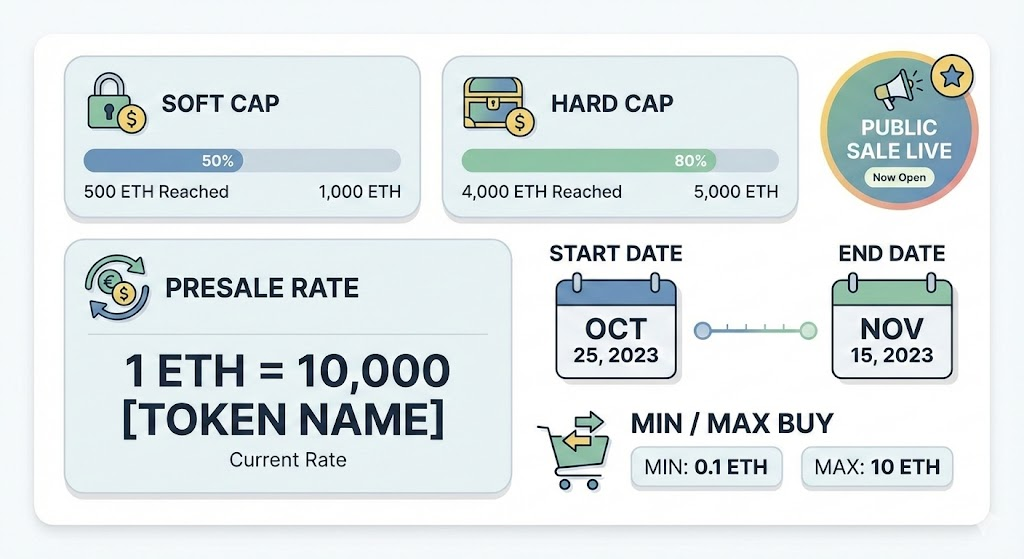
According to the PinkSale page, the soft cap is 1,800,000 USDT and the hard cap is 3,400,000 USDT. The presale rate is 1 USDT = 84.31 DAMBE, and the listing rate is shown as the same number (which can reduce confusion, because mismatched listing rates sometimes create instant price shocks).
The presale window is listed from 2026-02-14 00:00 (UTC) until 2026-03-06 11:59 (UTC).
Minimum and Maximum Contribution Rules
The page shows min buy: 15 USDT and max buy: 1,000 USDT. This kind of cap can help prevent a single wallet from swallowing a huge share of the pool. It doesn’t stop whales using many wallets, but it’s still better than “no limit at all.”
Liquidity Plan and Lock Details
Liquidity is the “market cushion” that supports trading on a DEX. Here, liquidity percent is listed as 51%, and liquidity lockup time is 365 days after the pool ends. In plain terms: a portion of raised funds and allocated tokens should be used to seed trading liquidity, and the lock is meant to reduce the risk of liquidity being removed quickly.
This is a meaningful trust signal if it is executed exactly as described and is verifiable on-chain (lock contract, lock proof, and unlock date). So the best move is: once it launches, verify the lock transaction rather than trusting screenshots.
Smart Contract Audit Signals (BlockSAFU Summary)
The BlockSAFU audit page lists the project name, contract address, chain, contract type, and summary outputs like trust score and issue counts. It displays Trust Score “A” with a “Very Secure” label, while showing 0 critical/major/medium/minor and 2 informational findings. It also shows an audit certificate marked “Passed” with date.

Issue Severity: What “Informational” Usually Means
“Informational” items are typically notes or best practices—things like code style, clarity, small optimizations, or non-exploitable patterns. That’s a positive sign compared to major findings, but it’s not the whole story. Audits can miss issues, and projects can change contracts later (or deploy new ones). So use this as a green flag—but not a blindfold.
Tax/Fee Behavior and Trading Friction
The audit page’s tax section shows 0% buy tax, 0% sell tax, and 0% transfer tax (“No tax in this contract”). That generally reduces trading friction and lowers the chance of “gotcha” fee mechanics.
The same audit page notes the contract name as AntiBotStandardToken and includes tags like “Pinksale Antibot,” hinting at anti-bot related features. Anti-bot logic can be helpful at launch, but it can also add complexity—so it’s worth verifying how trading is enabled and whether any special restrictions exist after launch.
Token Allocation and Supply Dynamics
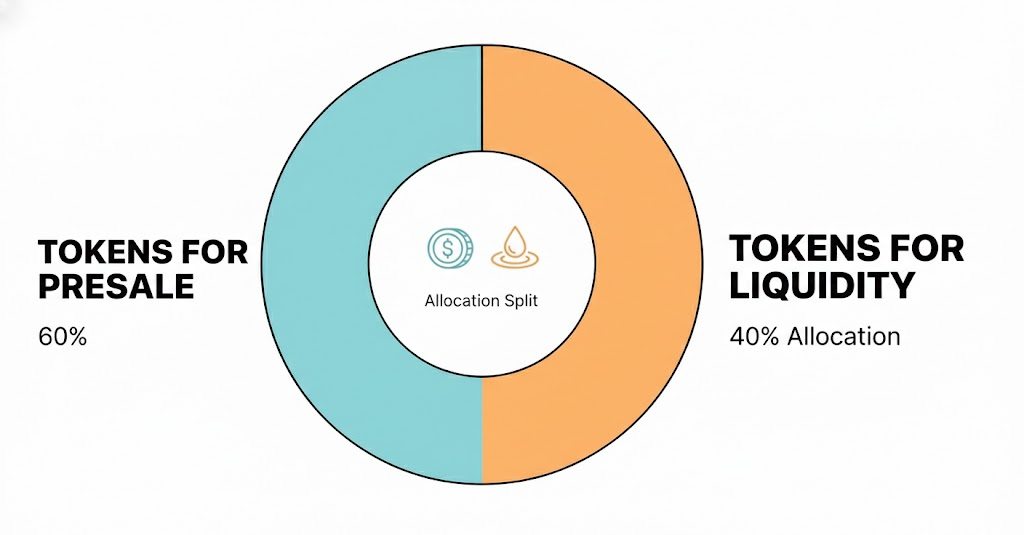
On the PinkSale presale page, token allocation is shown as:
- Tokens for Presale: 286,654,000 DAMBE
- Tokens for Liquidity: 146,193,540 DAMBE
This is useful because it lets buyers estimate how much supply is being introduced into the initial market and how much is earmarked to support trading. When presale tokens are large relative to liquidity tokens, price can be jumpy if many holders rush to sell. When liquidity is thin, price can swing wildly on small trades.
Liquidity Math Made Simple
Think of liquidity like the “depth” of a pool. A deeper pool is harder to splash. A shallow pool gets chaotic fast.
A 51% liquidity plan with a 365-day lock is a decent starting signal—again, assuming it’s verifiable after launch. The best practice is to:
- confirm LP tokens are locked,
- confirm lock duration and unlock date,
- confirm the DEX pair is correct,
- confirm trading rules match what the community expects.
Utility Story and Product Narrative
The PinkSale “About” section describes the token as a “long-term utility & settlement token” supporting payments, access rights, and economic coordination, with an emphasis on sustainability and avoiding short-term speculation. It also mentions DeFi inclusion tools (Adashe, Ajo, Esusu) and small business lending, plus “40+ years combined experience” in iGaming and fintech.

This narrative is ambitious. The key question is execution:
- Are there product demos?
- Are there transparent team profiles?
- Are there measurable milestones and timelines?
A strong story is not the same as a shipped product. The safest approach is to treat the narrative as “potential energy” until you see working features, user traction, and credible public accountability.
Operational Trust Checks (Website, Communication, Transparency)
The BlockSAFU page includes website scanning signals and notes like “SSL Status: Not Secure” and “Web Status: Not Active / Cloudflare.” These kinds of flags don’t automatically mean a scam—sometimes it’s a configuration issue—but they do mean you should be extra careful before connecting wallets, signing messages, or downloading files.
Pros, Cons, and Red-Flag Checklist
Pros
- Presale parameters are clearly listed (caps, rate, dates, min/max).
- Liquidity plan includes a 365-day lock window.
- Audit summary shows no critical/major findings and includes a “Passed” certificate.
- 0% buy/sell/transfer taxes shown on the audit page (lower friction).
Cons / Watchouts
- Audits don’t guarantee safety.
- Website security/status flags deserve extra caution before connecting wallets.
- Big narrative claims should be matched with proof (team transparency, product demos, milestones).
Quick Red-Flag Checklist (Before You Buy)
- Verify the correct token contract and pool address from the presale page.
- After launch: verify liquidity lock is real and matches stated duration.
- Confirm contract verification and owner privileges on-chain.
- Ensure official channels match across platforms (avoid fake links).
FAQs
1) Is an audit the same as a guarantee?
No. An audit is a risk signal, not a promise.
2) What does “Public” sale type mean here?
It typically means anyone can join without whitelist, within min/max rules.
3) Why do soft cap and hard cap matter?
They shape funding outcomes and launch expectations.
4) What’s the point of a liquidity lock?
To reduce early liquidity removal risk—verify it on-chain after launch.
5) If taxes are 0%, is that always good?
It often helps trading, but safety still depends on ownership and execution.
6) Where is the token supposed to list?
The presale page states PancakeSwap.
Conclusion and Practical Next Steps
Overall, DAMBE.BET presents a presale page with clear rules and an audit summary that looks clean on the surface. The smart move now is to verify execution:
- confirm contract + pool addresses,
- verify liquidity lock and unlock date,
- confirm contract verification and owner controls,
- demand proof behind utility claims.