Quick Project Snapshot
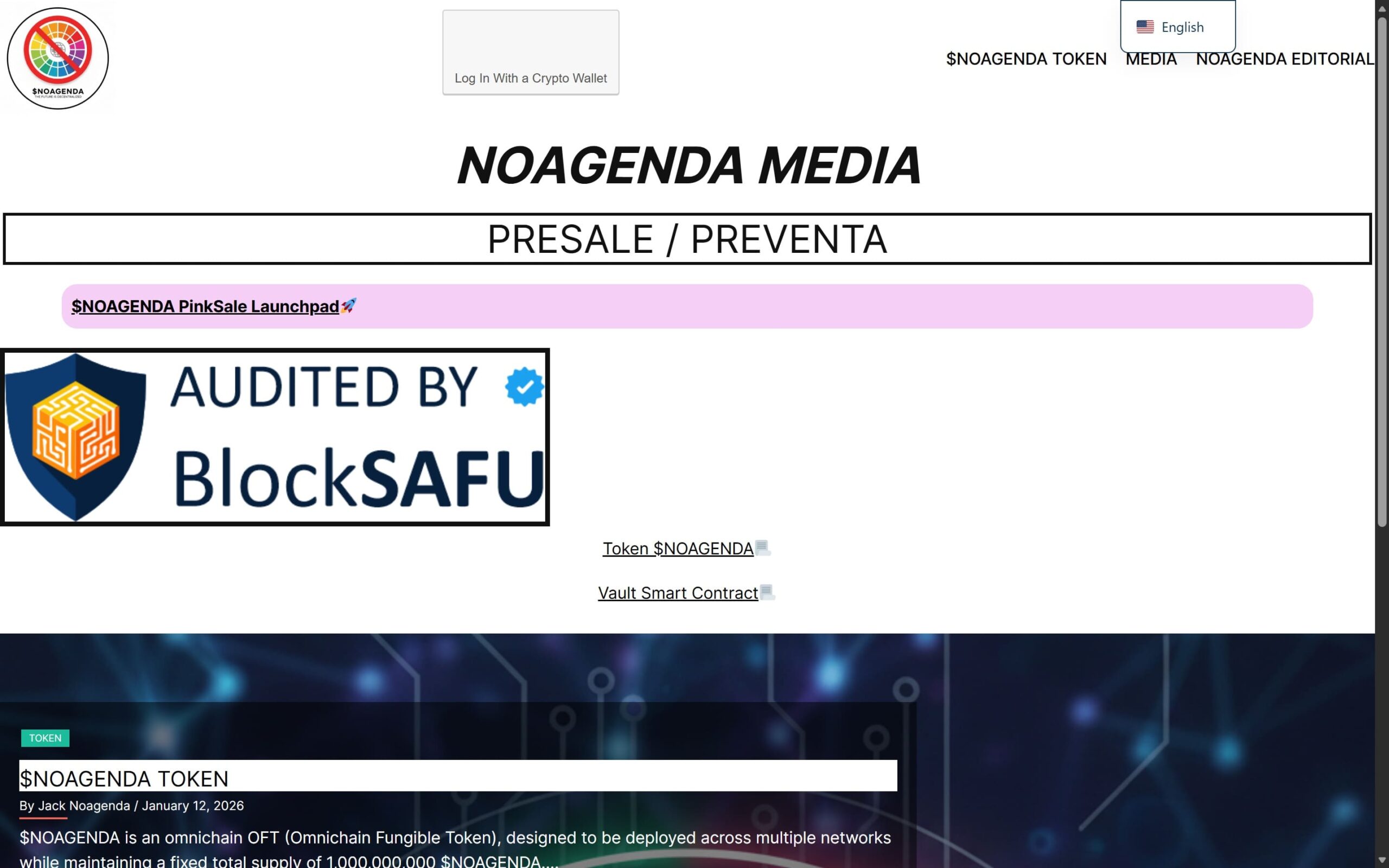
NoAgendaMedia presents itself as an independent media platform aiming to fund operations through a token-driven model. The core message is straightforward: community-funded media + token utility + censorship-resistance (permanent publishing) + future omnichain expansion.
What’s encouraging early on is that the project provides publicly checkable basics (presale listing, audit links, and stated token mechanics). That doesn’t prove success, but it does give you something real to verify instead of just marketing talk.
Presale Overview (PinkSale)
Based on the presale listing, the structure includes defined soft/hard caps, a clear timeline, a stated liquidity percentage, and a long liquidity lock period. Those details matter because they shape early trading volatility, price discovery, and buyer protection assumptions.
Still, even a “clean” presale setup can launch into chaos if liquidity is thin or hype spikes too hard. The safest approach is to prepare a plan (entry sizing, max loss, and when you’ll stop chasing).
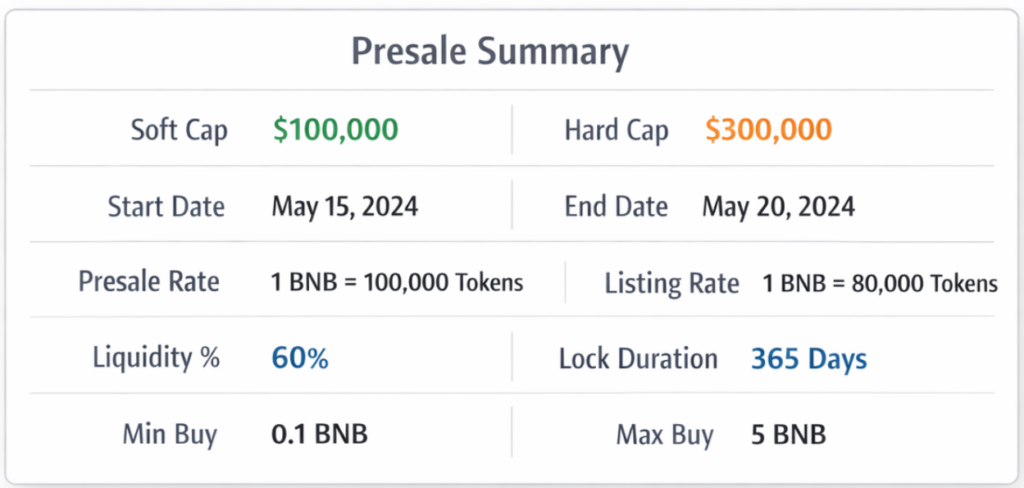
A useful way to stay objective is to compare what’s written on the presale page with what you can verify later on-chain (liquidity add, lock transaction, and listing execution). If the presale claims are consistent with on-chain behavior, that’s a meaningful trust signal.
Tokenomics & Fee Design
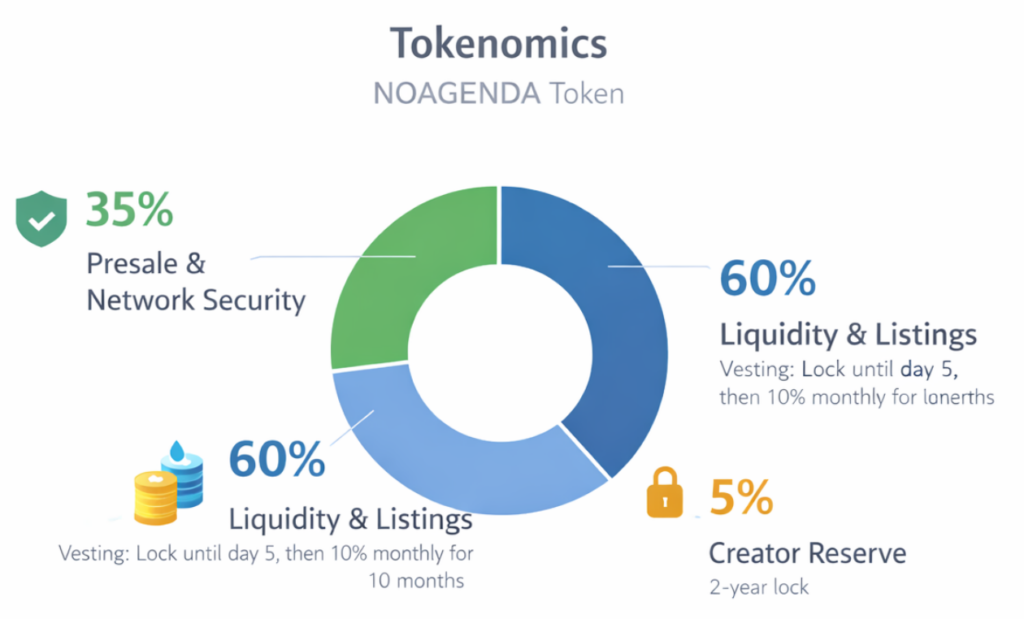
The project describes a structured distribution with presale allocation, liquidity/listings allocation under a vesting schedule, and a creator reserve under a longer lock. On paper, that can reduce immediate dumping pressure—if the vesting is enforced and the locks are transparent.
Tokenomics only become “real” when you can verify contract behavior, wallet allocations, and unlock schedules in a way that matches the stated plan.
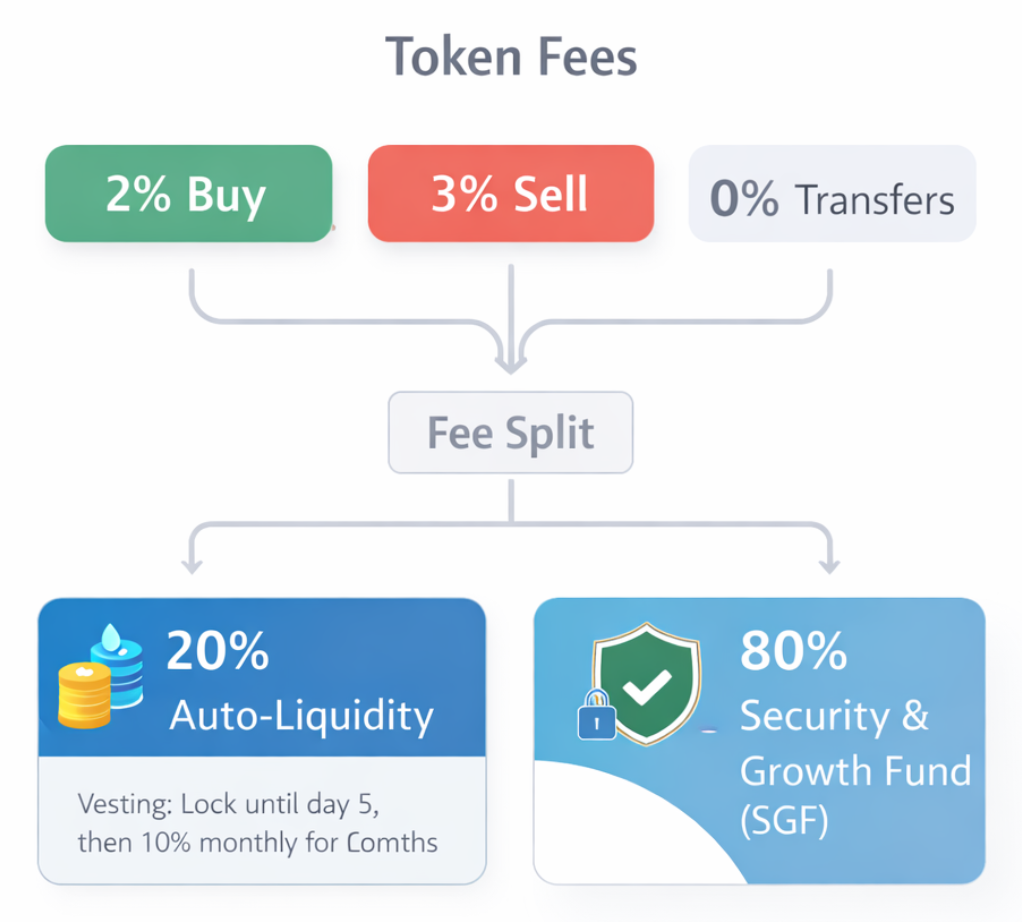
Now, about fees: the token uses a buy/sell fee model (rather than taxing wallet-to-wallet transfers). That’s often more user-friendly because it avoids punishing normal token movement, while still generating funds for liquidity support and operations.
The practical trade-off is simple: fees can help sustainability, but they also add friction for traders. That’s not automatically good or bad—it depends on how responsibly the fee funds are used and how transparent the reporting is.
Product Vision & Tech Stack (Where It Could Stand Out)
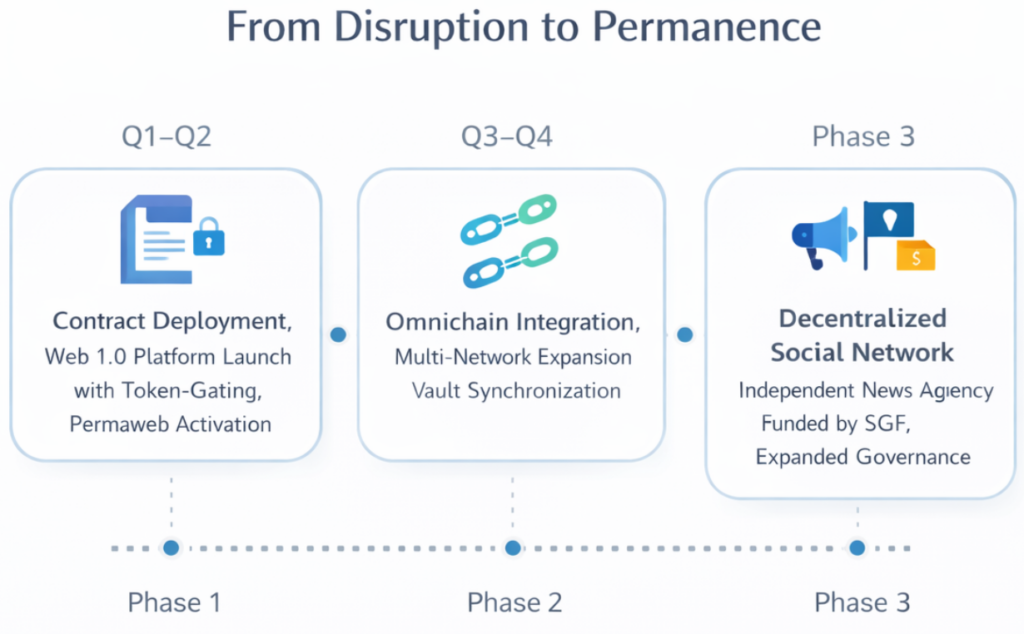
This project is pitching more than a token—it’s pitching a content platform with infrastructure choices that aim to support permanence and broader distribution.
Omnichain direction: If omnichain functionality is implemented properly, it can help the token reach multiple ecosystems. The flip side is that cross-chain functionality increases complexity, and complexity increases risk. It’s a feature worth watching closely, not blindly trusting.
Permanent publishing angle: The “publish once, preserve forever” story is compelling. If they ship a usable publishing experience (not just a concept), it could become a real differentiator compared to typical presales.
Token-gated access: Token gating can reduce spam and reward real supporters. But it can also turn into a paywall if the system feels too closed or too expensive for new users. Execution will decide whether it becomes a strong moat or a limitation.
Security, Audits, and What They Really Mean
The project provides audit links for the token contract and a vault contract. That’s a positive signal because it shows some willingness to go through structured review.
But the most important mindset is this: an audit reduces certain technical risks; it does not guarantee safety, profitability, or good behavior. You still have to verify contract ownership, admin controls, and whether any functions can be used in ways that harm holders later.

A smart DYOR habit is to treat audits like a seatbelt, not a forcefield. Look for specifics: what admin functions exist, what is changeable, and what is permanently locked. Also watch how the team responds when people ask uncomfortable questions—serious builders don’t dodge.
Governance & Trust Signals (The Human Factor)
Even with good tech claims, governance decides whether a project stays fair after launch.
Here’s what you should verify objectively:
- Who controls admin permissions (fees, whitelist, trading settings)?
- Are treasury wallets and operational funds transparent?
- Is there a multisig, timelock, or other “friction” to prevent sudden changes?
If the team is pseudonymous, that’s not automatically bad—but it means you should demand stronger on-chain protections and stronger transparency standards.
Roadmap Reality Check
Roadmaps are useful when they’re measurable. The best approach is to judge by delivery, not ambition.
A strong sign would be:
- platform releases you can test,
- visible progress updates with timelines,
- and actual product usage beyond speculative trading.
If the project hits early milestones (first 30–60 days), confidence typically rises. If milestones keep sliding without proof of work, risk rises.
Objective DYOR Checklist (Before You Ape)
If you do nothing else, verify these:
- Ownership & admin permissions (what can be changed, by whom)
- LP lock proof (transaction + lock contract + duration)
- Vesting/unlock schedule (dates + amounts + enforcing mechanism)
- Fee behavior (on-chain reality vs claims)
- Treasury transparency (wallets, reporting, purpose)
- Launch liquidity depth (thin liquidity = wild volatility)
FAQs
1) Is this financial advice?
No. This is an objective DYOR-style review.
2) Do audits guarantee safety?
No. Audits reduce technical risk but don’t remove market/team/operational risks.
3) What’s the biggest presale risk?
Volatility and execution risk—many projects look good on paper but fail to ship.
4) What should I check first?
Admin permissions, LP lock proof, and vesting/unlock schedule.
5) Is token-gating always good?
Not always. It can reduce spam, but can become a limiting paywall if poorly designed.
6) What’s a healthy presale mindset?
Assume high risk, size small, and plan for worst-case outcomes.
In the Presale section:
You can verify the presale details directly on PinkSale here:
https://www.pinksale.finance/launchpad/bsc/0xA3bF59FE9f427063CbE4511e18285C9Be16CC870
In the Token Audit section:
Token audit reference:
https://blocksafu.com/audit/0xE0470BA63B2847f9A04Ae8b4253b2f44943d0648
In the Vault Audit section:
Vault audit reference:
https://blocksafu.com/audit/0x2a9D0D70a52FE942076C9471Dff57bFa1BF63007
Conclusion: A Positive, Cautious Take
NoAgendaMedia has a few promising signals: clearly stated presale mechanics, a structured token model, and public audits. The product narrative (media platform + permanence + multi-network reach) is more “utility-driven” than many presales.
Still, the right stance is optimistic but strict: verify on-chain facts, assume volatility, and only risk what you can afford to lose.
If you’re building a token or dApps for your project. You can request an audit directly here:
BlockSafu audit request: https://blocksafu.com/request
Or DM our telegram: https://t.me/BLockSAFU