1. Quick Project Summary
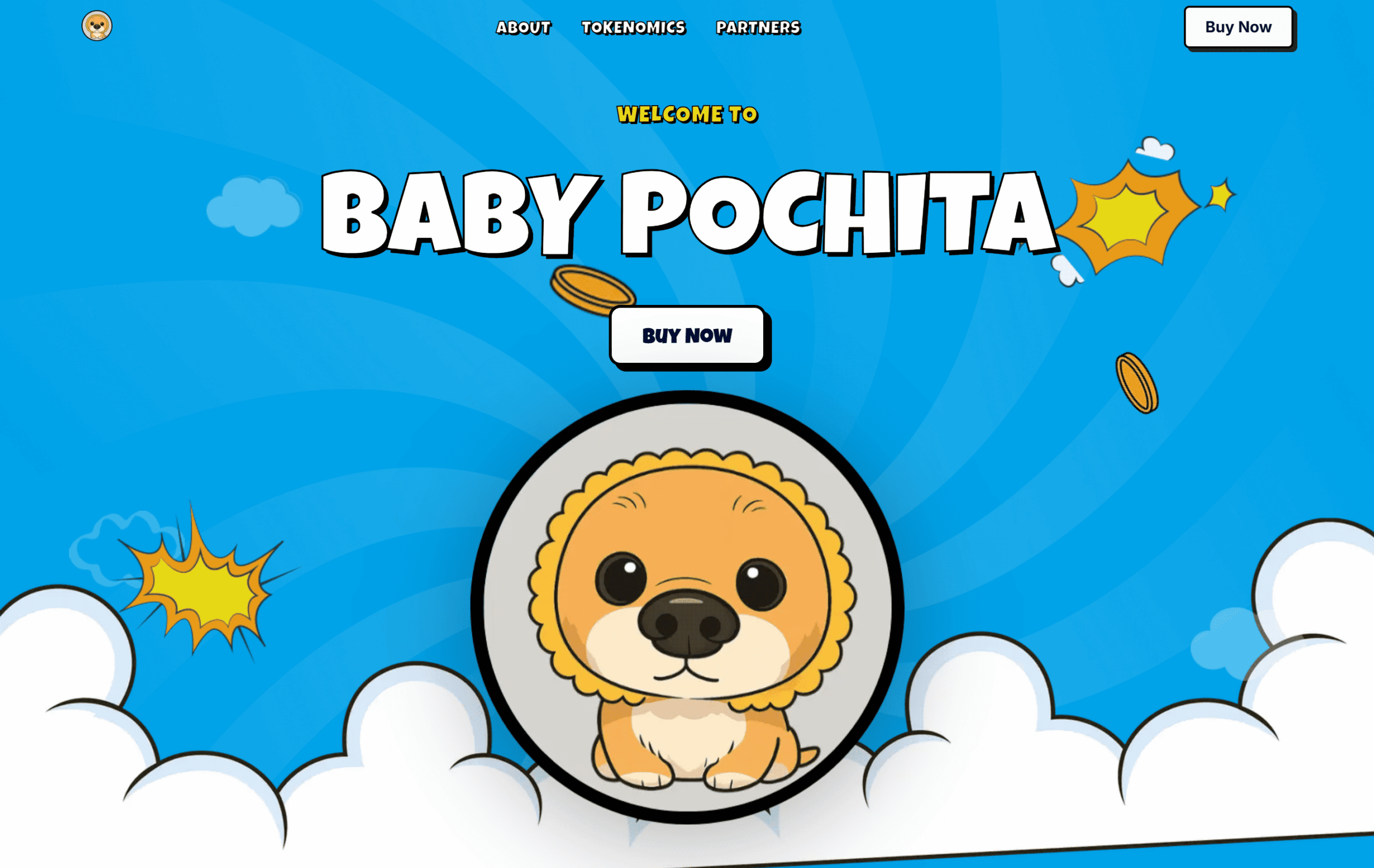
If you only have 60 seconds, here’s the gist: Baby Pochita appears as a fairlaunch on PinkSale (BSC), marked “Upcoming,” and it shows fairly clear pool details—starting from presale token allocation, listing plan, and the presale schedule. On the security side, there’s a BlockSAFU audit displaying a Trust Score A with issues categorized as “informational,” not heavy categories like “critical” or “major.”
That said, meme coins are like riding a roller coaster—fun, but it can flip your stomach if you jump in without a seatbelt. PinkSale also reminds users to DYOR (Do Your Own Research) and not treat a listing as an investment endorsement.
1.1 What the Project Promises
On the PinkSale page, the project’s narrative highlights loyalty, patience, and community—“no rush, no shortcuts”—which is typical for community-driven meme coins. This isn’t a long technical utility pitch; it’s more about branding and vibe.
2. Official Data from PinkSale (BSC)
This section matters because many people get trapped by fake links. Think of PinkSale as the “official bulletin board” for presales/fairlaunches—what you should pull from it is the token contract address, pool address, token allocation, and sale rules.
2.1 Token Details
From the PinkSale page, the token details shown are:
- Name: Baby Pochita
- Symbol: BabyPochita
- Decimals: 9
- Token Address: 0x4eBedC93d9B6BB4AD68C80CaDc6bdc4A70606c7D
Safety note: PinkSale also warns not to send BNB to the token address.
2.2 Pool Details & Schedule
PinkSale shows the pool information as:
- Tokens For Presale: 673,000,000 BabyPochita
- Tokens For Liquidity: 343,230,000 BabyPochita
- SoftCap: 0.1 BNB
- Start: 2026.01.02 15:00 (UTC)
- End: 2026.01.03 15:00 (UTC)
- Sale type: Public
2.2.1 Buy Limit & Public Access
Because it’s a Public sale, in theory anyone can join as long as they follow the rules. PinkSale lists Max buy 0.3 BNB. This is usually meant to limit whale domination so distribution is broader (though whales can still “split wallets” in practice).
2.2.2 Listing Plan & DEX
The listed plan is to launch liquidity on PancakeSwap. This makes sense for BSC tokens because PancakeSwap is a major DEX in that ecosystem.
3. Liquidity & Lock: How “Crash-Resistant” Is It?
In meme coins, liquidity is basically the “road in and out of the market.” If liquidity is thin, prices can jump wildly and selling can be painful (high slippage). That’s why two numbers matter: Liquidity percent and Liquidity lockup time.
PinkSale lists:
- Liquidity percent: 51%
- Liquidity Lockup Time: 150 days after pool ends
3.1 Lock Numbers and What They Mean
51% liquidity percent means a portion of the raised funds is directed to forming liquidity on the DEX. The “lock 150 days” means LP tokens (or an equivalent mechanism) are locked for that period after the pool ends.
In plain terms:
- Good news: the lock can reduce the risk of an instant liquidity pull right after launch.
- What to watch: lock does not mean “safe forever.” Once the lock ends, what happens next depends on whoever controls the liquidity/contract. Lock is a brake, not a concrete wall.
4. BlockSAFU Audit: Good Score, But Stay Alert
An audit is like a “vehicle inspection report”: it helps you see the engine condition, but it doesn’t guarantee the car won’t crash if the driver is reckless. BlockSAFU also states the audit is a technical evaluation and not an endorsement, and investors should still DYOR.
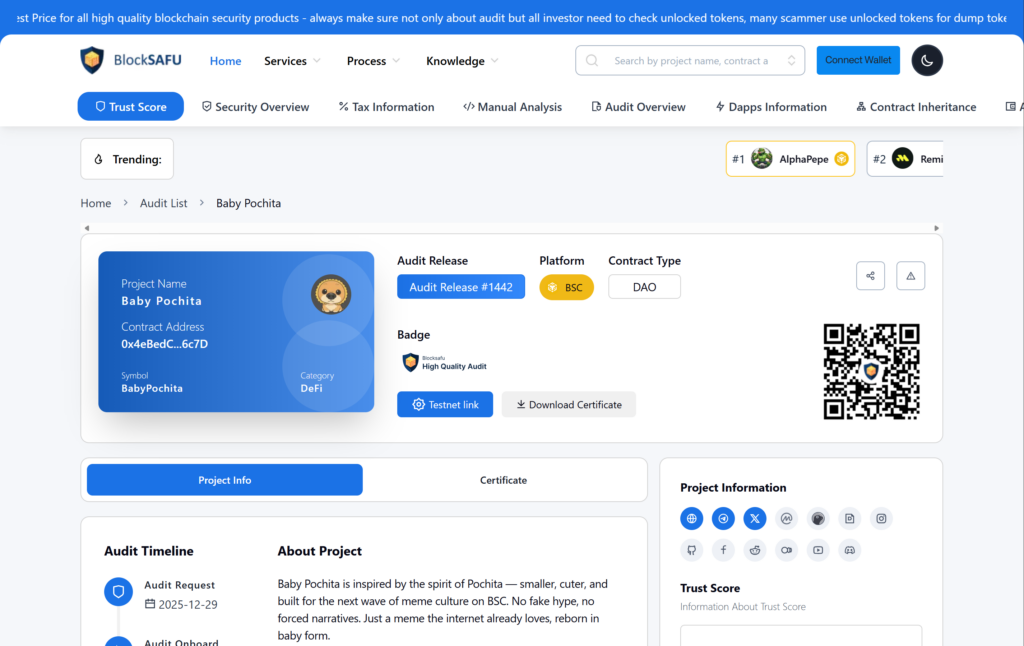
BlockSAFU audit: https://blocksafu.com/audit/0x4eBedC93d9B6BB4AD68C80CaDc6bdc4A70606c7D
The audit page shows:
- Project Name: Baby Pochita
- Contract Address: 0x4eBedC…6c7D
- Platform: BSC
- Contract Name: BabyPochita
- Compiler: v0.8.26
- Audit timeline: 2025-12-29 (request/onboard/release)
4.1 Trust Score & Code Review
On the audit page, Trust Score is shown as A (Very Secure). Under “Code Review,” it lists:
- 0 Minor
- 0 Medium
- 0 Major
- 0 Critical
- 3 Informational
This suggests no “heavy” findings in the summary. Still, “informational” issues can matter depending on context, and a short summary doesn’t always catch non-technical risks (like misleading marketing).
4.2 Contract Taxes/Fees
For traders, the most practical part is the transaction tax:
- Buy tax total: 2% (Marketing)
- Sell tax total: 2% (Marketing)
- Transfer tax: 0%
4.2.1 Why a Small Tax Still Matters
A 2% tax may look small, but it still affects:
- Entry/exit costs: buy 2%, sell 2% → friction can sting in sideways markets.
- Market behavior: it can reduce aggressive scalping, but also lower short-term trader interest.
- Marketing wallet transparency: the tax receiver wallet is shown—ideally, you verify activity via an explorer.
5. Simple Tokenomics: Presale vs Liquidity
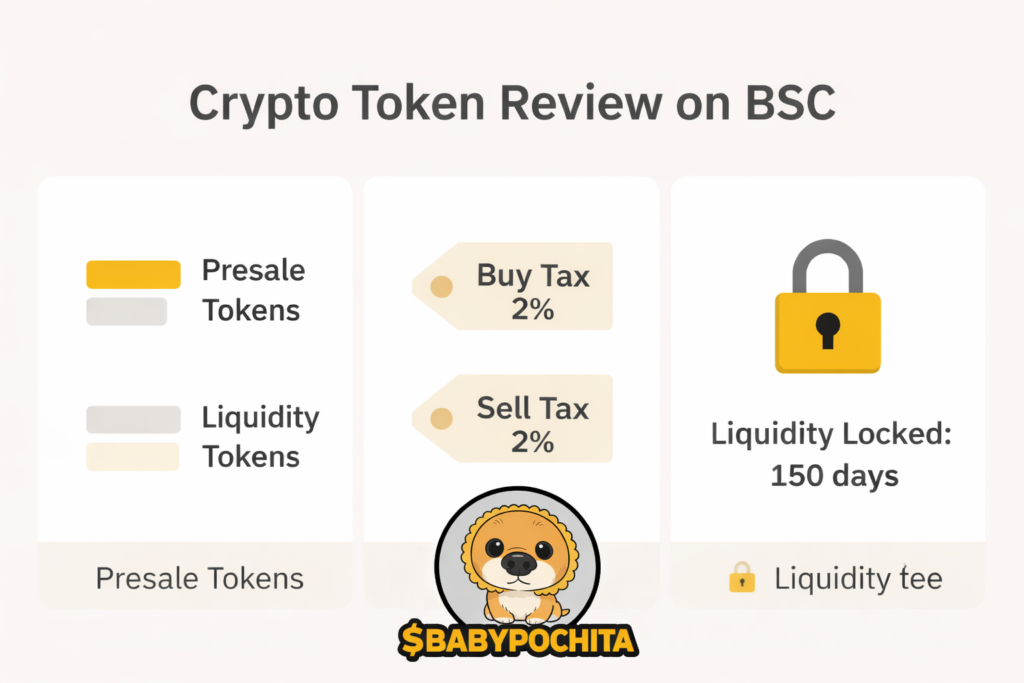
Here’s a quick table:
| Component | Value (from PinkSale) |
|---|---|
| Tokens For Presale | 673,000,000 BabyPochita |
| Tokens For Liquidity | 343,230,000 BabyPochita |
| SoftCap | 0.1 BNB |
| Max Buy | 0.3 BNB |
| Listing | PancakeSwap |
| Liquidity % | 51% |
| Liquidity Lock | 150 days |
PinkSale pool (Baby Pochita): https://www.pinksale.finance/launchpad/bsc/0x0Aa4A6B5b5b94FcD91b262d14636CE4b3Bb69432
5.1 Token Split in the Pool
From the presale vs liquidity numbers, the project allocates a larger portion for presale and a smaller portion for liquidity. This is common in simpler fairlaunch/presale setups, but the real impact depends on how much BNB is actually raised, how the listing price is calculated, and how the market reacts after listing.
If you want a cleaner DYOR process, you can also check the audit page’s early-holder snapshot as a rough view of distribution (but it can change over time).
6. Typical Meme Coin Risks on BSC
Meme coins can “pump fast” due to community hype, but they can also “dump fast” because of:
- FOMO and panic selling (extreme swings)
- Copycat tokens (similar name, different contract)
- Fake links (phishing, fake PinkSale pages)
PinkSale even reminds users to ensure the domain is correct—this is a sign that lookalike-domain scams are common.
6.1 Technical Risk vs Market Risk
- Technical risk: contract bugs, dangerous functions, unreasonable taxes (audits help here).
- Market risk: post-listing price action, real liquidity depth, community hype, and crowd psychology (audits can’t “lock” this down).
6.1.1 Common Red Flags (For You to Check Yourself)
Even if not shown in a short summary, you should still check common items like:
- any extra mint functions,
- any blacklist/whitelist restrictions that could block selling,
- whether ownership/admin control is too strong.
Bottom line: audits help, but you still drive the car.
7. How to Join a PinkSale Fairlaunch (Step-by-step)
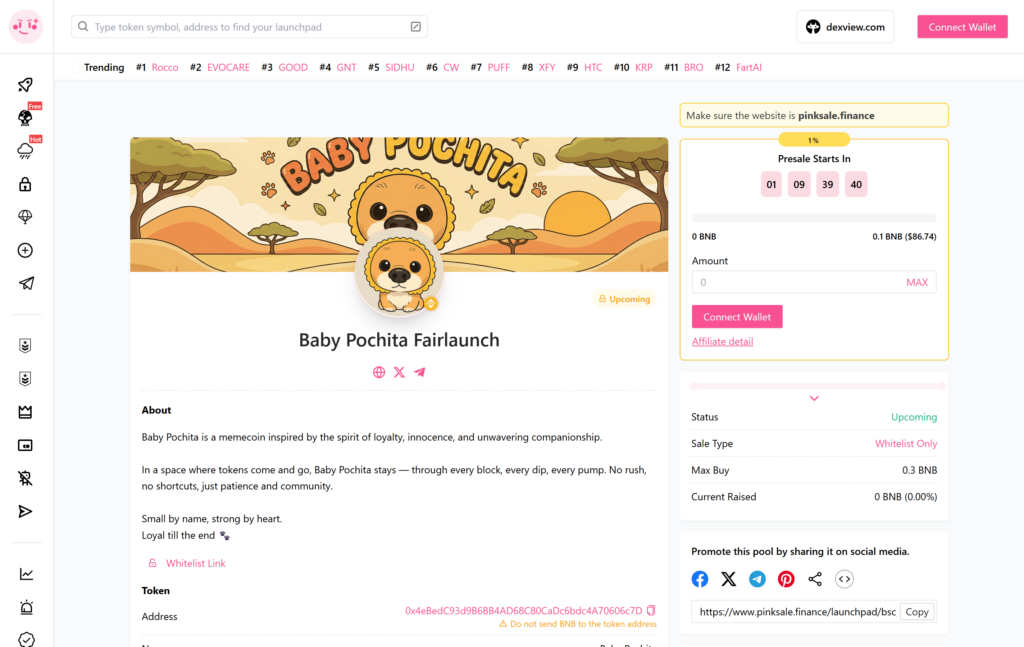
7.1 Wallet & Funds Prep
- Prepare an EVM wallet (e.g., MetaMask) on BSC.
- Hold enough BNB for purchase + gas.
- Understand the rules: Public sale, max buy 0.3 BNB, and the start/end schedule.
7.1.1 Tips to Avoid Sending to Wrong Address
- Don’t send BNB to the token address.
- Don’t send BNB to the pool address.
- Only transact through the correct PinkSale interface.
8. A Realistic DYOR Checklist
Here’s a quick “10-minute” checklist before you join:
8.1 The 10-Minute Checklist
- Verify the PinkSale domain (pinksale.finance).
- Match the token address across the PinkSale page and the audit page.
- Check pool rules: softcap 0.1 BNB, max buy 0.3 BNB, and the UTC schedule.
- Understand the tax: 2% buy and 2% sell (marketing).
- Review liquidity settings: 51% and 150-day lock.
- Read disclaimers: audit and launchpads aren’t guarantees of safety/profit.
8.1.1 DYOR Learning Sources
If you want a clean, beginner-friendly DYOR reference, Binance Academy explains DYOR and why it matters.
DYOR (Binance Academy): https://www.binance.com/en/academy/glossary/do-your-own-research
9. Pros & Cons (Honest and Clear)
Pros
- Clear pool data: tokens for presale & liquidity, schedule, and buy rules are shown.
- Audit summary shows Trust Score A and 0 critical/major in the summary section.
- Taxes are relatively small (2% buy/sell), with 0% transfer tax.
Cons / Things to watch
- Meme coins heavily depend on hype and community; technical utility isn’t deeply described on the page.
- Liquidity lock expires (150 days), so post-unlock monitoring matters.
- An audit isn’t a guarantee; BlockSAFU itself emphasizes DYOR and risk.
10. FAQ (Most Common Questions)
1) Is Baby Pochita guaranteed safe because it has an audit?
No. An audit helps assess technical aspects, but market and operational risks still exist. Always DYOR.
2) When does the fairlaunch start and end?
It states 2026.01.02 15:00 (UTC) to 2026.01.03 15:00 (UTC).
3) What is the maximum buy?
The displayed max buy is 0.3 BNB.
4) Are there transaction taxes?
Yes. The audit summary shows 2% buy and 2% sell (marketing), and 0% transfer tax.
5) Where is it planned to list after presale?
The listing plan shown is PancakeSwap.
6) What does a 150-day liquidity lock mean?
Liquidity is locked for 150 days after the pool ends, helping reduce the risk of an instant liquidity pull—though you still need to monitor what happens after unlock.
7) Why does PinkSale warn about domains?
Because fake sites and lookalike domains are common. Always verify you’re on the real domain.
11. Conclusion
Baby Pochita is a meme coin fairlaunch on PinkSale (BSC) with transparent pool parameters (softcap, max buy, token allocation, listing plan). The BlockSAFU audit summary looks strong on paper (Trust Score A, no critical/major issues in the summary), plus a 2% buy/sell tax structure.
But the most important thing is this: meme coins are high-risk. If you panic easily when you see red candles, it’s smarter to move slowly. If you still want to join, treat the DYOR checklist like a helmet—not a formality.